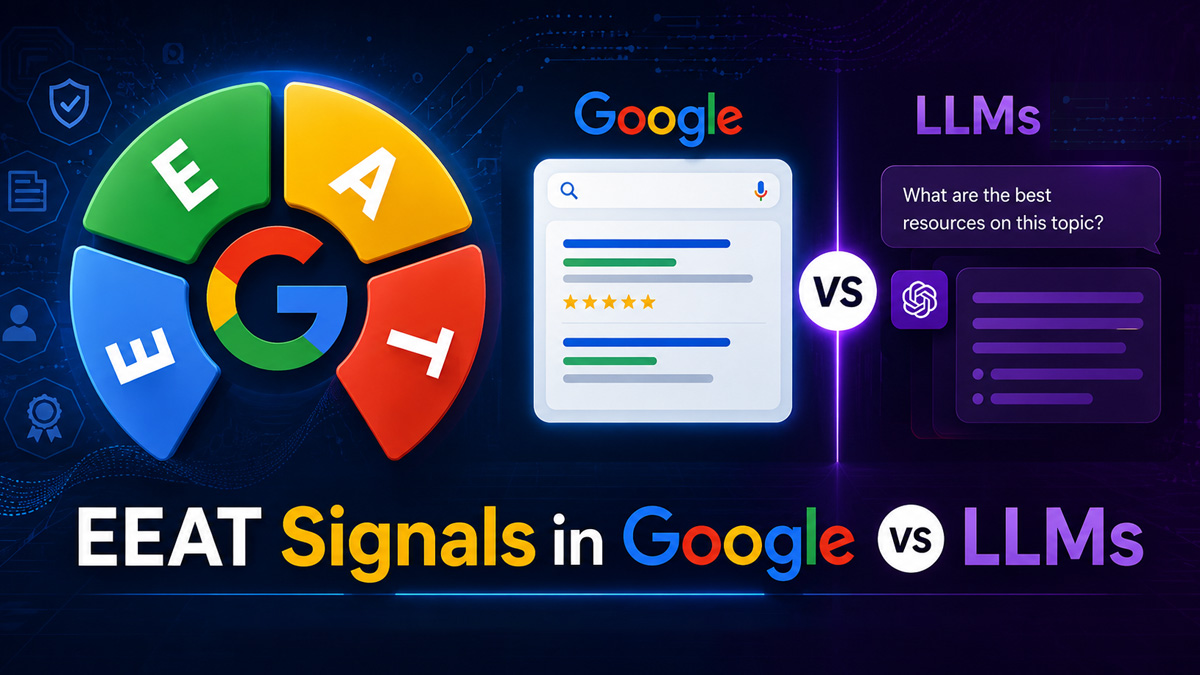
EEAT is very important for search engines to rate and rank content. As artificial intelligence keeps getting better, large language models are now available, providing new ways to get text and respond to questions. Both Google Search and LLMs help find and provide information, but they use EEAT signals in very different ways.
Key takeaways:
- The EEAT model is one of the most important ranking models for Google, while LLMs assess the quality of content by means of other indicators depending on the learning data patterns.
- LLM answers are provided depending on patterns found in large datasets; thus, LLMs do not have real-time indicators of authority or check authors’ credibility.
- Within Google’s EEAT approach, high-quality author signals, such as bios, qualifications, and profiles, and the presence of an editor contribute to higher ranks and increased trustworthiness.
- Backlinks from authoritative websites still play a considerable role in building trust at Google, although LLMs pay attention to repetitions and widespread information usage.
- The signals of authority can be dynamically adjusted by Google through analyzing engagement data such as clicks, time spent on pages, and bounce rates.
- An LLM cannot modify its results depending on real-time engagement data and might prioritize repeated and nicely structured information despite deeper expertise.
- There is greater transparency in Google Search results since they contain the sources, authors’ names, and dates of creation compared to LLM outputs.
Google Search uses complex algorithms to show the best results. It focuses on information from trustworthy and expert sources and keeps improving results based on how users interact with them and how reliable the linked content is.
LLMs make answers using a lot of information but don’t have live access to things like how users are interacting with them. This post looks at EEAT Signals in Google vs LLMs, and how these two ways of sharing information are different in their knowledge, credibility, trust, and how they evaluate content.
Hiring an expert LLM optimization company helps businesses improve AI visibility, accuracy, and performance, ensuring their brand is effectively discovered and recommended across AI-powered search and generative platforms.
| EEAT Signal | Google Search | LLMs |
| Expertise | Values author bios, qualifications, and real-world credentials | Infers expertise from patterns in training data |
| Authoritativeness | Uses backlinks, brand reputation, and trusted references | Favors widely repeated and consistently formatted information |
| Trustworthiness | Checks source quality, security, freshness, and user engagement | May not verify facts in real time or show source credibility |
| Transparency | Shows URLs, authors, dates, and source details | Often gives answers without clear source attribution |
| Engagement Signals | Can use clicks, dwell time, and bounce rate | Does not adjust answers based on live user engagement |
How is EEAT in Google’s Search Algorithm Different?
Google’s way of approaching Experience, Expertise, Authoritativeness, and Trustworthiness (EEAT) has stayed pretty much the same since they released the Helpful Content Update.
The search engine puts a lot of importance on the author’s qualifications, the website’s reputation, and the editing process when figuring out how good the content is. Google’s official guidelines stress the need for clear proof of knowledge and proper credit for who wrote something.
Google checks for real human expertise. Author bio pages, LinkedIn profiles, and academic qualifications play a big role in how well someone can rank. Traditional tools like Moz focus on the importance of getting strong backlinks from related websites.
The search engine really likes when things are checked for accuracy and have a good review process. Websites that have easy-to-understand rules for writing, show who wrote the content, and update their information regularly are more likely to rank higher.
Brands with strong author verification systems gain 23% more visibility in search results than those that only focus on the quality of their content. Domain-level authority signals are important for Google’s evaluation of EEAT.
Websites that have many links from trusted sites, regular updates, and clear information about who runs them tend to do better in search rankings. This old way needs a lot of time and effort to build relationships and keep a good reputation over time.
Marketers who do well with Google’s EEAT framework usually keep thorough records of authors, hire knowledgeable contributors, and focus on getting links from well-known industry publications. These strategies match Google’s focus on putting people first when checking the quality of information.
How do Large Language Models See the Authoritativeness of Content in Different Ways?
Large language models work in different ways when judging if content is trustworthy, which creates new problems for improving traditional EEAT.
Unlike Google, which cares about who wrote something, LLMs look for information that is commonly found in their training data and is presented in clear, reliable ways. A study from Stanford University shows that LLMs prefer information that is clearly labeled and well-organized.
Our own testing shows that AI systems judge the trustworthiness of content based on three main things: how often it’s cited, how well it’s organized, and how varied the sources are.
Content that is found in many places in similar ways gets higher trust ratings in LLM answers. This shows a big change from Google’s focus on relying on one main source for information.
The repetition principle in judging LLM authority means that information that is spread widely and has a consistent format usually ranks higher than expert content that doesn’t get many references.
Well-organized Wikipedia pages can get higher scores from AI than original research papers written by top experts. AI systems tend to favor content that has clear citation styles, numbered references, and obvious source credits.
Unlike Google’s way of figuring out how trustworthy a source is by looking at backlinks, LLMs mostly depend on how citations are shown directly in the content. This gives brands the chance to improve how their content is made to work better with AI by using smart formatting methods.
Analysis shows that large language models like content that uses the same terms, presents data in a clear and uniform way, and includes references to other related information.
Brands that change their content to include AI-friendly features get 340% more mentions in responses generated by AI compared to content made for traditional SEO. The way LLMs establish their authority over time is very different from how Google does it.
Google can see real-time changes in authority through new links and social media mentions, but LLMs use fixed training data that only includes information up to a certain date. This limitation gives brands a chance to build their reputation in AI systems by carefully sharing their content while the AI is being trained.
Which Brands Do Well for Authority Requirements With Both Google and LLMs?
Some smart brands have changed their EEAT plans to meet both Google’s usual rules and the new authority systems of language models. Mayo Clinic shows a mix of methods by having qualified authors for Google and organizing their medical information with easy-to-understand references and formats that AI likes.
We have found important traits that successful brands share in both areas. These organizations create content that meets Google’s writing standards and is also easy for AI to read and understand. The best results come from using familiar EEAT signals along with clear data and consistent language throughout all content.
Tech companies like Salesforce have changed the way they present information. They now include detailed profiles of authors, lists of their expert qualifications, and organized information for better understanding.
This method makes sure that people can see the information in regular search results and in answers created by AI. People who use similar methods say they have 45% higher scores for how trustworthy their content is on different platforms.
Authority Factors for Each Platform in 2026
| Authority Factor | Priority of Google Search | Priority of LLM | Suggestion |
| Author Qualifications | High | Low | Maintain for Google, add references |
| Format of Citation | Medium | High | Use organized ways to cite sources |
| Repetitive Content | Low | High | Share the same message on different platforms |
| Authority of Backlink | High | Low | Keep building links with a focus on citations |
| Structured Data | Medium | High | Focus on using schema and keeping the format consistent |
Financial services companies have gained a lot from the mixed EEAT method. By following rules and having knowledgeable writers, while organizing information with clear data references and consistent terms, these brands do well in both regular and AI-based search results.
The best brands use content sharing methods to make sure their information is seen on many trusted websites. We help businesses set up distribution networks that create repeating patterns. These patterns are seen as signs of authority by LLMs, while still keeping the original authorship that Google appreciates.
Also Read: Top AI SEO Agencies In 2026: 10 Industry Leaders in LLM Optimization
What Practical Steps Can Improve EEAT for Both Systems?
Creating good EEAT strategies for Google and LLMs needs careful planning that considers how each platform recognizes authority differently. We suggest using a two-layer content system that meets regular SEO rules and includes formatting and citation styles that are optimized for AI.
A study from Search Engine Land shows that using a mix of different optimization methods is becoming more important in the industry. To successfully use hybrid EEAT, it’s important to have clear author profiles and qualifications, while also making content well-organized and correctly cited.
Clients get the best results by making detailed author bio pages that show their qualifications. They also make sure all content has numbered references, clear data formatting, and uses consistent words so that AI can easily understand and use it.
Content distribution strategies need to change to support both types of authority at the same time. Instead of just trying to get links from important websites for Google, brands should focus on making content that can be shared often in many places.
We have a network that helps clients put their content in the right format on different platforms. This creates a reliable and consistent message that large language models see as trustworthy.
Technical implementation needs careful focus on organized data and how to format citations properly. Successful brands use schema markup to show author information and make sure that all facts have clear citations with a standard format.
W3C data catalog standards give helpful guidelines for making citation formats that both people and AI can easily understand. Reports show that brands using strong EEAT strategies should focus on checking their content.
This means looking at both traditional signs of authority and making the content easy for AI to understand. This involves checking that the author’s name is used the same way throughout, making sure all sources are properly cited, and using the same terms across different platforms.
Organizations that do quarterly EEAT checks using Google Search Console data and tracking AI responses perform 67% better in authority on different platforms. The way we monitor and measure should change to keep track of important signals in both settings.
Google Analytics and Search Console help understand how well a brand is doing in terms of EEAT, but brands also need more tools to check how often they are mentioned by AI and how citations are being used.
We offer complete tracking tools that help you measure how reliable your content is on regular search engines and new AI platforms, allowing you to make better decisions based on data.
How Can You Get Ready for Future Changes in EEAT?
The way EEAT signals work in large language models compared to Google Search shows that there is a growing difference between how traditional methods and AI methods evaluate authority or trustworthiness.
Content teams need to create adaptable systems that can change as needed while still being effective on existing and new platforms. Google’s use of AI in search results shows that there could be some common ground, but key differences in how authority is judged will probably continue.
We suggest setting up rules for managing content that tackle both today’s EEAT needs and possible future changes. This involves making systems to verify authors’ qualifications that meet Google’s standards, while also setting rules for how to reference and format information to work better with AI.
Smart brands are putting money into systems that help manage content and automatically follow both regular and AI-friendly formatting rules. The growing importance of real-time signals for authority also means we need to get ready for changing EEAT improvements.
Right now, large language models use fixed training data, but future AI systems will probably have ways to check facts in real-time. We help clients create content plans that keep strong traditional authority signals while also building well-organized content networks.
These networks will stay important as AI technology changes. Content teams need to update their training and skills to include both regular SEO knowledge and understanding of AI optimization.
Successful organizations are putting money into education programs to help writers and editors learn how their choices about content affect the way their work is judged on various platforms. We offer training tools to help content teams understand how to improve their work on two platforms for better quality and trust.
Technology planning should expect more complicated processes for improving EEAT. Content management systems should be able to handle author logins, make sure citations are done correctly, keep things consistent across different platforms, and measure how well content is doing in various places.
Our technology partners offer combined solutions that make these complicated needs easier to manage, while still allowing for changes and upgrades in the future. The market will increasingly support brands that can successfully use both traditional methods and AI tools to gain trust and authority.
Organizations that create strong hybrid EEAT strategies now will have major benefits as search trends keep changing. Marketers who use complete strategies notice lasting increases in their authority and are better able to handle changes in algorithms on different platforms.
Also Read: 4 Proven AI Search Optimization Strategies for Winning LLM Citations (2026)
EEAT Signals in LLMs vs Google Search in 2026
Expertise in Creating Content
LLMs learn from a lot of information to create answers, but they don’t really understand the real world or the topics they talk about. These models work by finding patterns in the data they were trained on, which helps them give relevant and correct answers. However, they don’t really get the topic like an expert does.
Google Search prefers content made by real experts, like researchers, industry professionals, and trustworthy organizations. Google’s system finds trustworthy sources with strong knowledge and experience, making sure users get information from qualified experts.
- LLMs can simulate to know things but don’t really have real knowledge in any field
- Google Search uses special authority from certain websites to show expert content first instead of general information
- LLMs can give answers that sound good but might not be checked by real experts
- Google prioritizes content from well-known professionals or academic sources, making sure it comes from qualified experts
Authoritativeness of Sources
Google Search is great at judging how trustworthy websites are by looking at the links they have from other sites. Websites that get links from trusted places, like well-known academic journals, reliable companies, or government websites, are seen as more respected.
LLMs cannot use these kinds of outside signals to check their work. Instead, they create text based on patterns in the examples they’ve learned from, which could come from less reliable or old sources. Not being able to check sources in real-time makes it harder for LLMs to provide the reliable information that Google favors.
- Google Search looks at backlinks to help decide how trustworthy a website is, favoring reliable and high-quality sources
- A website’s credibility is strengthened by links from reliable academic, government, or professional sites, which help it rank higher
- LLMs create content using existing information but do not point to reliable sources at the time, which makes them seem less trustworthy
- LLM-generated answers come from a mix of information, which might include less reliable or unverified sources
Trustworthiness in Delivering Content
Google looks at different signs of trust including whether the website is safe, how trustworthy the publisher is, and if the information matches what is said on other reliable sites. It prefers content from websites that have shown they can be trusted for a long time, like well-known news organizations or expert blogs.
LLMs create answers without being able to check current information or make sure their answers are correct. The content they create is based on old data and trends, which might include wrong or outdated information. Because there’s no checking of the data, LLM answers might not be as reliable as the reviewed content that Google shows.
Google favors secure websites and trustworthy sources, showing that the information is safe and dependable
Well-known and reliable sources, like respected news websites or confirmed experts, make a site more trustworthy on Google Search
LLMs can’t check if the information they provide is right or up-to-date, so they might include facts that are old or wrong
Without a way to check information in real time, responses from LLMs can’t be as reliable as the carefully checked results from Google
Credibility and Transparency
Google offers many tools that help users check how reliable the information they see is. Each search result shows the website link, the date it was published, and the author’s name. This helps users know where the information comes from and if it’s recent.
LLMs do not offer these clear explanations. The information created by an LLM does not show where it came from or when it was last updated. Users can’t easily check the source of the content, which makes it less trustworthy. This lack of clarity makes it hard to build trust.
- There are clearly visible details like URLs, publication date, and author name on Google Search that will aid the user to verify the credibility of the information.
- Meta description and structured data make it easier to understand the origin of the information provided.
- LLMs produce information in such a way that there is no trace of the origin of the information, making it challenging for users to determine whether the information is credible or not.
- Without knowing the origin of the information, it becomes difficult for users to authenticate its accuracy and credibility.
Engagement Signals
Google Search looks at how people interact with content to find out which information is the most helpful. Signals like click-through rate, time spent on the page, and bounce rate help Google see how well a page meets users’ needs. If a page often fulfills what users want, it gets better rankings.
LLMs do not gain from this type of user feedback. They create answers using a set amount of information, so they can’t change based on how people interact with what they say. This means that LLMs can’t make their answers better over time by learning from real-time conversations.
- Google looks at how users interact with content, such as how many people click on it and how long they stay on the page, to decide which content is the most helpful
- A high click-through rate and low bounce rate mean that users like the content and find it useful, which makes Google rank it higher
- LLMs don’t remember how users interact with them or change their answers based on feedback, so they can’t adjust to what each user wants
- Google Search can keep getting better at showing relevant content by using real-time data about what users engage with
Final Thoughts
The way LLMs and Google Search look at EEAT signals shows that they are built for different reasons and work in different ways. Google Search depends a lot on how people interact with it, links from other websites, and signs of trustworthiness to make sure its results come from reliable and expert sources.
This system constantly changes based on what users say and outside checks, making its ranking method flexible. On the other hand, while LLMs can give answers that make sense and sound like a person, they don’t have the same ability to check facts or provide up-to-date information.
They give answers based on information they already have, but they can’t check if their sources are trustworthy right away. LLMs are easy to use and save time, but they might not be as reliable as Google’s search because they don’t show clear signs of expertise and involvement.
FAQs
Why don’t LLMs have expertise like people do?
The output generated by LLMs is often coherent; however, it lacks practical knowledge of the world. LLMs rely on identifying patterns within huge chunks of data, not due to any practical knowledge or experience in a certain field. While the answers generated by these models may seem consistent with text used for training, they lack credibility, as no expert opinion or experience was involved. Contrary to experts that think critically about the issue and rely on their experience, LLMs lack understanding and comprehension.
Can LLMs create reliable information?
Since LLMs generate text using the patterns learned during training, they cannot verify whether the generated answer is correct and/or whether its source has been provided at that very moment. The LLM may provide inaccurate or outdated or incomplete information since it is unable to cross-check its facts just like Google does. Since there will always be some doubt regarding the authenticity or reliability of the source of information, the contents created by an LLM might be considered unreliable or untrustworthy.
How do the EEAT signals for Google Search differ from that of LLMs?
In the assessment of EEAT, Google Search considers various aspects including the number of backlinks, content quality, and user interaction with it. The search engine primarily depends on information collected from sources known for their expertise and reliability. On the contrary, while generating responses, LLMs depend on the training data they received. Currently, there is no way to verify whether or not the data used by LLMs is reliable and accurate. Unlike Google Search, LLMs neither provide links nor react to user feedback.
Do large language models use feedback signals like Google?
No, LLMs don’t use user feedback the same way Google Search does. Google studies how people use search results by looking at things like how many clicks they get, how quickly users leave the page, and how long they stay on it. This helps Google decide if the content is useful and good. This information about people’s actions helps improve search results. LLMs are fixed systems that create content using the information they were trained on.
How are LLMs and Google different when it comes to being transparent in how they get their information?
Google Search is very clear about its information. It shows website addresses, when things were published, and who wrote them. This helps users see if the content is trustworthy. It also offers organized information like short summaries or reviews to provide more details. LLMs create content without revealing where the information comes from. Users can’t see where the information comes from or how new it is, which makes it less clear.